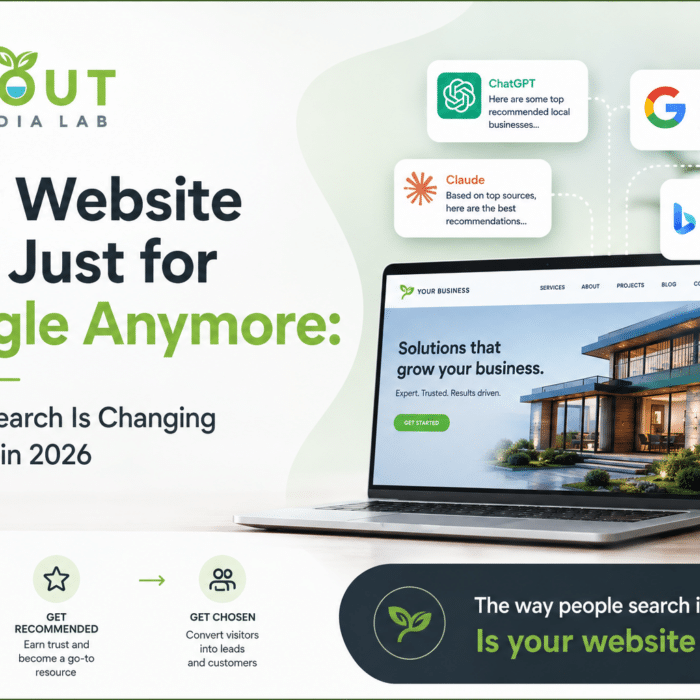


The way customers find local businesses is changing again. And this time, artificial intelligence is leading the charge.
For years, businesses have focused on ranking higher on Google, appearing in the Google Maps 3-Pack, and optimizing their websites to attract more customers.
Those strategies still matter. But there’s a new player in the local search game: ChatGPT.
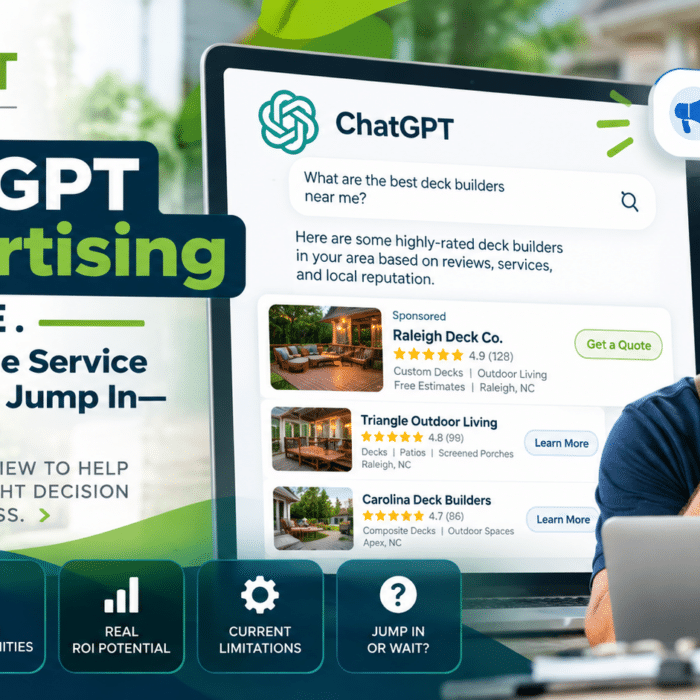
On November 10, 2026, OpenAI announced the beta launch of Businesses in ChatGPT, introducing new features that allow eligible businesses to claim their profiles, manage business information, and gain insights into how customers discover them through AI-powered conversations.
It’s an important development for small businesses, local service providers, and contractors that depend on online visibility to generate leads.
And it raises a question every business owner should be asking:
When someone asks ChatGPT to recommend a business like yours, will your company be part of the conversation?
ChatGPT Is Moving Beyond Answers to Business Discovery
Think about how people traditionally search for a local business.
Someone looking for a landscaping contractor might type “best landscaping company near me” into Google, review the search results, compare a few companies, and visit their websites.
Now, that same customer might open ChatGPT and ask:
- “Who are the best landscaping companies in Daytona Beach?”
- “Can you recommend a reputable hardwood floor refinishing company in Charlotte?”
- “What’s the best pressure washing company in Jacksonville with good reviews?”
- “Which local deck builders also install wood fences”
Rather than simply displaying a list of websites, ChatGPT can help customers explore their options, compare businesses, and ask follow-up questions.
The difference is significant.
Traditional search helps customers find websites. AI-powered search can help customers narrow down which businesses they want to contact.
That means your business needs to be visible not only in traditional search results, but also in the information sources AI platforms use to formulate recommendations.
What’s New? ChatGPT Introduces Business Profiles
OpenAI’s new Businesses in ChatGPT platform represents a meaningful step toward making ChatGPT a business discovery destination.
Through its new Business Hub, eligible companies can claim and verify their business, update information, and monitor certain customer interactions.
Here are three features business owners should know about.
1. Claim and Manage Your Business Profile
Similar in concept to managing a Google Business Profile, eligible businesses can now claim a business presence within ChatGPT.
Once verified, businesses can update important information, including their company description, website, services or products, and other supported profile details.
For businesses selling products, there are additional opportunities to provide product feeds containing pricing and availability information.
Why does this matter?
Because accurate, consistent business information makes it easier for customers – and the platforms helping them search – to understand what your company offers.
A landscaping contractor, for example, should clearly communicate whether they specialize in landscape design, lawn maintenance, hardscaping, outdoor living, or irrigation.
The more clearly your services and specialties are described, the better positioned your business may be to appear in relevant AI-powered discovery experiences.
2. See How Customers Discover Your Business Through ChatGPT
One of the most interesting developments is the introduction of business visibility reporting.
OpenAI’s Business Hub provides eligible, verified businesses with aggregated insights into how their company is represented and discovered.
These insights include:
- Business Mentions: How frequently your business appears in qualifying ChatGPT results.
- Website Clicks: How often users click through to your website.
- Discovery Topics: Common themes associated with conversations where your business is referenced.
This creates a new opportunity for businesses to better understand their visibility beyond traditional Google rankings.
Imagine discovering that ChatGPT frequently references your company when people research “custom outdoor kitchens,” but rarely when they search for “paver patio installation.”
That information could help shape your website content, service descriptions, and future marketing priorities.
The reporting is aggregated, subject to privacy thresholds, and does not provide access to individual customer conversations.
3. AI Business Agents Can Help Customers Explore Your Services
OpenAI has also introduced Business Agents, an AI-powered experience that allows customers to interact directly with participating businesses through ChatGPT.
Eligible businesses can provide information that helps their Business Agent answer questions about products, services, and other business details.
For example, a customer researching a product could ask about available options, compare features, and learn more before visiting the company’s website.
Business Agents are initially available to eligible U.S. ecommerce and online service businesses, with broader availability planned over time.
While these capabilities are still evolving, they offer a glimpse into a future where customers may move from researching a business to engaging with it without leaving an AI-powered platform.
Does This Mean Google SEO Is Becoming Less Important?
Absolutely not.
Google remains an essential source of online visibility and lead generation for local businesses.
Your website, Google Business Profile, local rankings, reviews, and Google Ads campaigns still play important roles in attracting customers.
But the search landscape is expanding.
Businesses now need to think beyond traditional Search Engine Optimization (SEO) and consider two increasingly important strategies:
Answer Engine Optimization (AEO)
AEO focuses on making your content easy for AI-powered systems and answer engines to understand and use when responding to customer questions.
Generative Engine Optimization (GEO)
GEO focuses on improving how your business, expertise, and content are represented in AI-generated responses across platforms such as ChatGPT, Google Gemini, and other generative search experiences.
Together, SEO, AEO, and GEO create a more comprehensive approach to online visibility.
The objective is no longer just to rank for a keyword.
It’s to make your business easier to discover, understand, and consider wherever potential customers are searching.
6 Things Your Business Can Do Right Now to Improve AI Search Visibility
The good news is that many of the strategies that support traditional SEO can also strengthen your foundation for AI-powered discovery.
Here are six practical steps to get started.
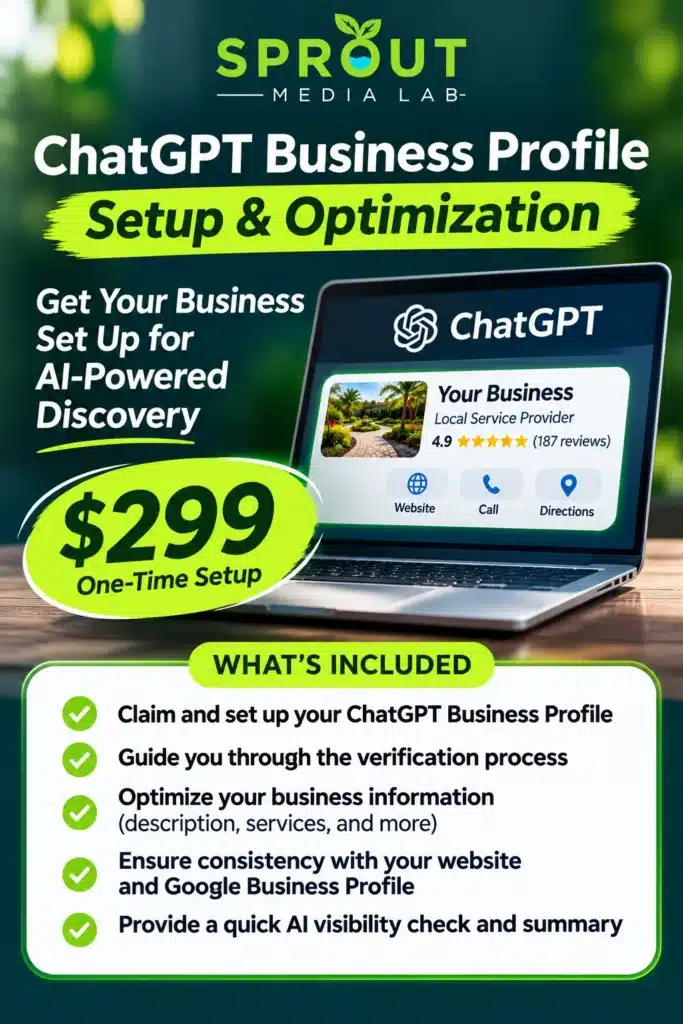
1. Claim Your ChatGPT Business Profile
Visit OpenAI’s Businesses in ChatGPT platform and determine whether your company is eligible to claim its profile.
Complete the required verification process and review your business information for accuracy.
Keep in mind that claiming a profile does not guarantee your business will be recommended or receive higher placement in ChatGPT responses.
2. Strengthen Your Google Business Profile
Your Google Business Profile remains an important component of local search visibility.
Make sure your business categories, services, service areas, hours, contact information, and website links are accurate and complete.
Maintain consistent information across other reputable business directories and online listings as well.
3. Create Detailed, Service-Specific Website Content
AI search systems need to understand exactly what your business does, where you operate, and what makes your services relevant.
Instead of relying on one general services page, consider developing dedicated pages for your primary offerings.
For example, a pressure washing company might benefit from individual pages covering house washing, roof cleaning, driveway cleaning, paver sealing, and commercial pressure washing.
These pages should provide helpful, original information—not simply repeat keywords.
4. Answer the Questions Your Customers Are Asking
Think about the questions customers ask before hiring your company.
Questions like:
- How much does hardwood floor refinishing cost?
- What’s the difference between pressure washing and soft washing?
- When is the best time to install new landscaping?
- How long does a paver patio installation take?
Develop helpful FAQ sections, blog articles, and service content that answer these questions clearly.
This supports traditional SEO while making your website more useful for AI-powered answer generation.
5. Build Trust Through Reviews, Expertise, and Credibility
Customer reviews, testimonials, completed project galleries, relevant credentials, and detailed company information help establish trust with prospective customers.
They also create a stronger online presence that search platforms may use when evaluating businesses.
Focus on earning authentic reviews, showcasing your work, and demonstrating real experience within your industry.
6. Start Monitoring Your AI Search Visibility
Try searching ChatGPT and other AI platforms using the kinds of questions your customers might ask.
For example:
“Who are the best hardscaping contractors in my area?”
“Which local companies specialize in custom outdoor living spaces?”
Pay attention to whether your business appears, which competitors are mentioned, and what information is presented.
Because AI-generated responses can vary, individual searches shouldn’t be treated as definitive rankings.
Instead, use repeated testing, available Business Hub insights, and website analytics to identify patterns and opportunities.
The Bigger Picture: AI Search Is Creating a New Competitive Landscape
Consider how much local search has changed over the past decade.
First, businesses needed a website.
Then, they needed strong Google rankings.
Next came Google Maps, Google Business Profiles, online reviews, and increasingly sophisticated local SEO strategies.
Now, AI-powered discovery is becoming another important part of the customer journey.
For small businesses, this creates both a challenge and an opportunity.
Companies that continue investing in accurate business information, helpful website content, strong local SEO, and online credibility will be better prepared to adapt as AI search evolves.
Businesses that ignore these changes may find themselves competing for visibility in places they aren’t actively monitoring.
And while no agency can guarantee placement in ChatGPT’s independent recommendations, there are meaningful steps businesses can take to improve the quality, consistency, and accessibility of their online presence.
Is Your Business Ready for the Next Generation of Search?
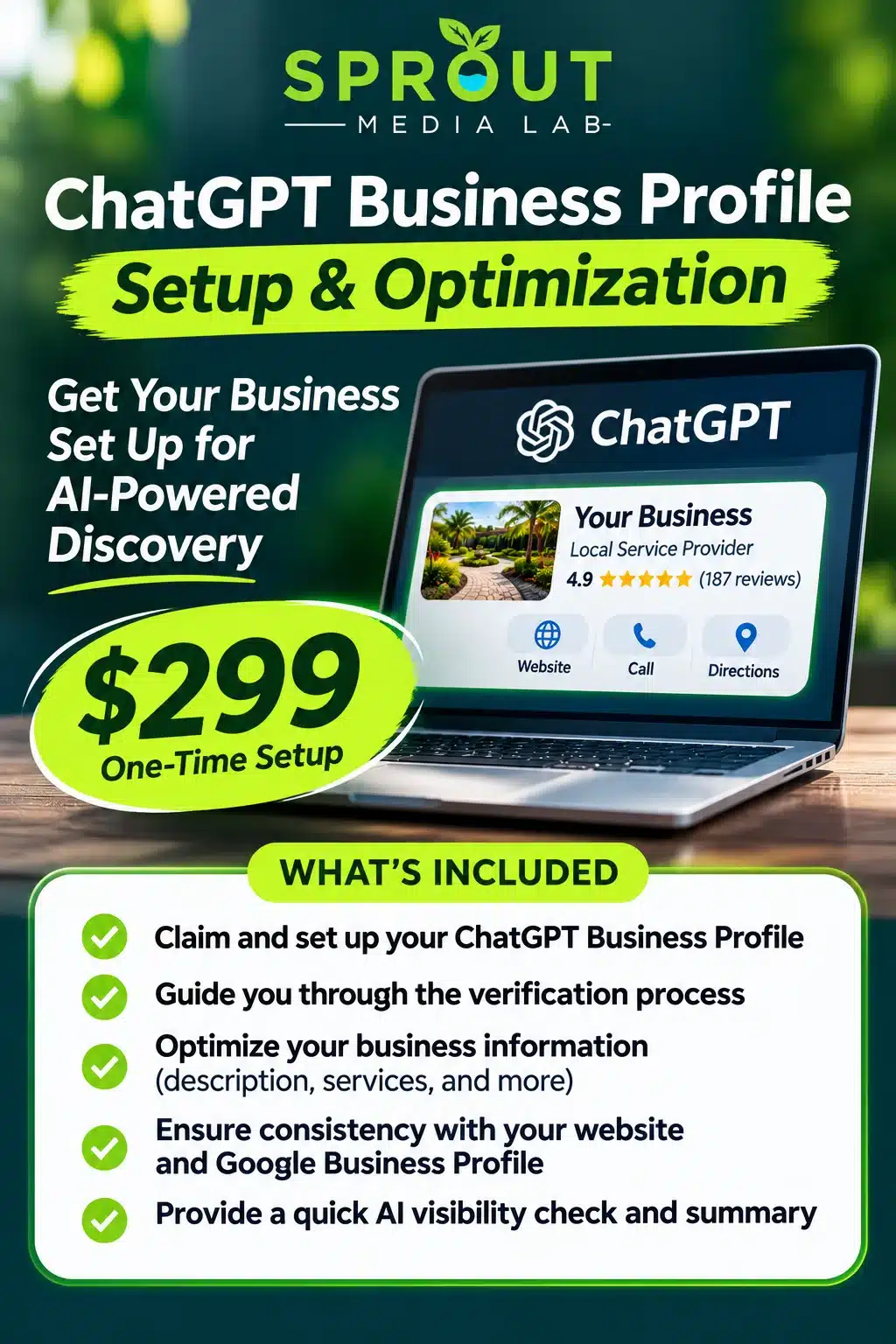 At Sprout Media Lab, we believe successful digital marketing is about more than simply driving traffic to a website.
It’s about helping businesses get discovered by the right customers, at the right time, and turning that visibility into meaningful leads and new business opportunities.
That’s why our approach to digital marketing continues to evolve alongside search technology.
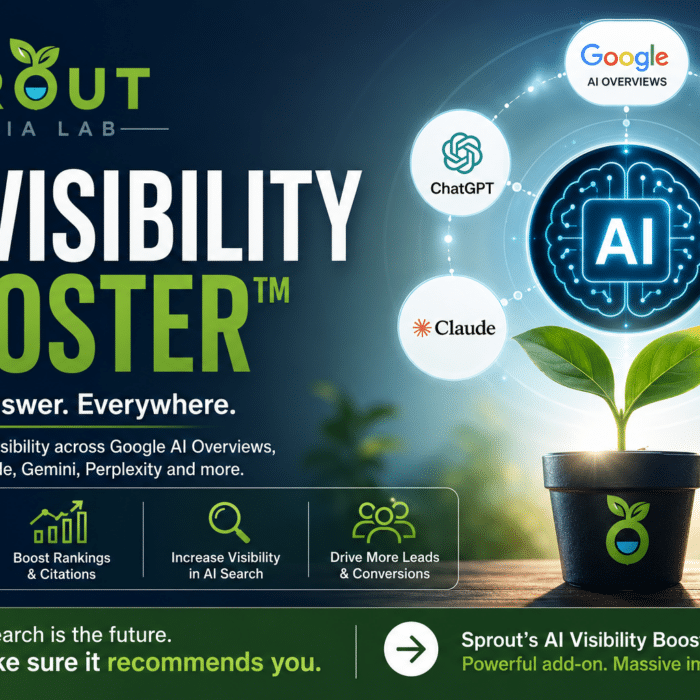
From traditional SEO and Google Business Profile optimization to emerging AI SEO, Answer Engine Optimization, and Generative Engine Optimization strategies, we help businesses strengthen their online presence across the platforms customers use to research and compare companies.
The way people search is changing. Your digital marketing strategy should evolve with it.
Let’s Find Out How Visible Your Business Really Is.
Are potential customers finding your company when they search on Google, ChatGPT, and other AI-powered platforms?
Let’s take a closer look.
Contact Sprout Media Lab today to request a FREE consultation and learn how we can help your business improve its online visibility, attract more qualified leads, and stay competitive in the evolving world of search.
Get Your Free SEO Visibility Audit → | Book a Free Consultation →
Explore Our SEO Services →